
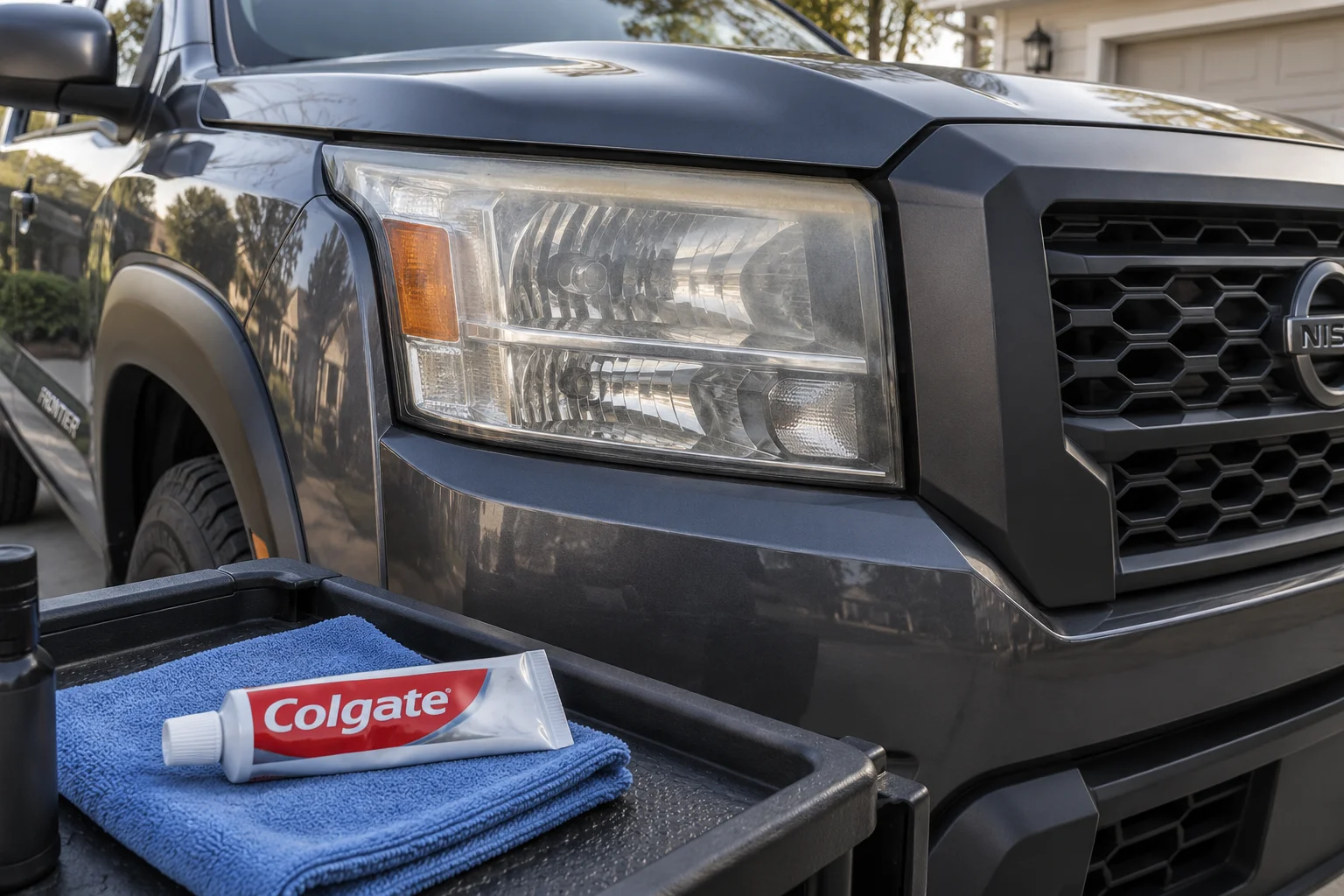
Toothpaste might make a mildly hazy headlight look clearer, but it isn't a complete restoration. Some formulas contain abrasives, which may explain the polishing effect. That doesn't tell you how they'll affect your lens or what will protect it afterward. We'd choose a product made for headlights.
Why does it sometimes look like it works?
The appeal is obvious: you've already got toothpaste, and the video makes the job look easy. Rub it on, wipe it off, and the headlight looks better.
There’s a plausible reason for that. Colgate explains that hydrated silica acts as an abrasive in toothpaste, helping remove stains from teeth. That abrasion may also explain some of the clearer-looking headlights people report. Colgate isn't recommending it for car lenses, though.
Different formulas, different headlights, different amounts of rubbing—you aren't starting with a repeatable recipe. And a glossy close-up doesn't tell you how the lens will look after weeks outdoors or how well the light is working.
When you look at a before-and-after comparison, check whether both shots show a clean, dry lens in similar lighting. Otherwise, you're left guessing how much actually changed.
Tried it and nothing happened? You're not the only one
In this Reddit thread, an owner said toothpaste hadn't cleared their headlights and asked how to restore them properly. Their next questions were about sandpaper, polish, and preparation. It's one person's experience, but it's a familiar kind of DIY problem: the quick fix didn't work, and now what?
Resist the urge to combine every suggestion in the replies. One person's sanding steps and another person's coating choice might not work together. Pick a headlight-specific system and follow its complete instructions.
What protects the lens afterward?
This is the question a toothpaste video needs to answer. Getting the lens to look clearer is only part of the job.
For example, 3M's headlight clear-coat guidance describes a coating that dries to a UV-resistant finish and gives preparation steps for using it. It's a useful example of what to look for when comparing products: a method for preparing the lens and a finish intended to protect it.
Before buying a kit, check that it's suitable for your lens material and condition. Read the preparation and curing instructions too. Don't assume you can skip a step because another video did.
For more on what affects the finished result, read how long headlight restoration lasts. A photo taken straight after rubbing on toothpaste can't answer that.
Already tried it? Here's what to check next
Remove any residue using your vehicle's exterior-care guidance, let the lens dry, and look at it in daylight. Before adding another product, work out what you're still seeing:
- Smears or a film: check for leftover cleaning residue.
- Yellowing or a patchy outer finish: have the lens assessed for a proper restoration.
- Droplets behind the lens: read our headlight condensation guide. You can't reach those by rubbing the outside.
- Cracks or a light that isn't working: get it inspected before doing more cosmetic work.
If you ask someone to assess the headlights, tell them what you've used, including any sanding or coating. You don't need to tidy up your attempt before showing them. That history helps them understand what they're looking at.
Our restore-or-replace guide covers the conditions that may need a different repair.
Choose a fix you can finish properly
If you're going the DIY route, read the whole set of instructions before you buy. Check the tools you'll need, the working conditions, and how long the finish needs to cure. Make sure you've got the time and space to complete the job.
If you'd rather have someone handle it, ask what's included in the service and what goes on the lens after preparation. You can see Haze To Clear's pricing and service details and our restoration process here.
We'd leave the toothpaste in the bathroom. For your headlights, choose a process with clear instructions and a protective finish made for the job.
Sources checked October 2, 2026. Reddit accounts are anecdotes, not independent verification.