
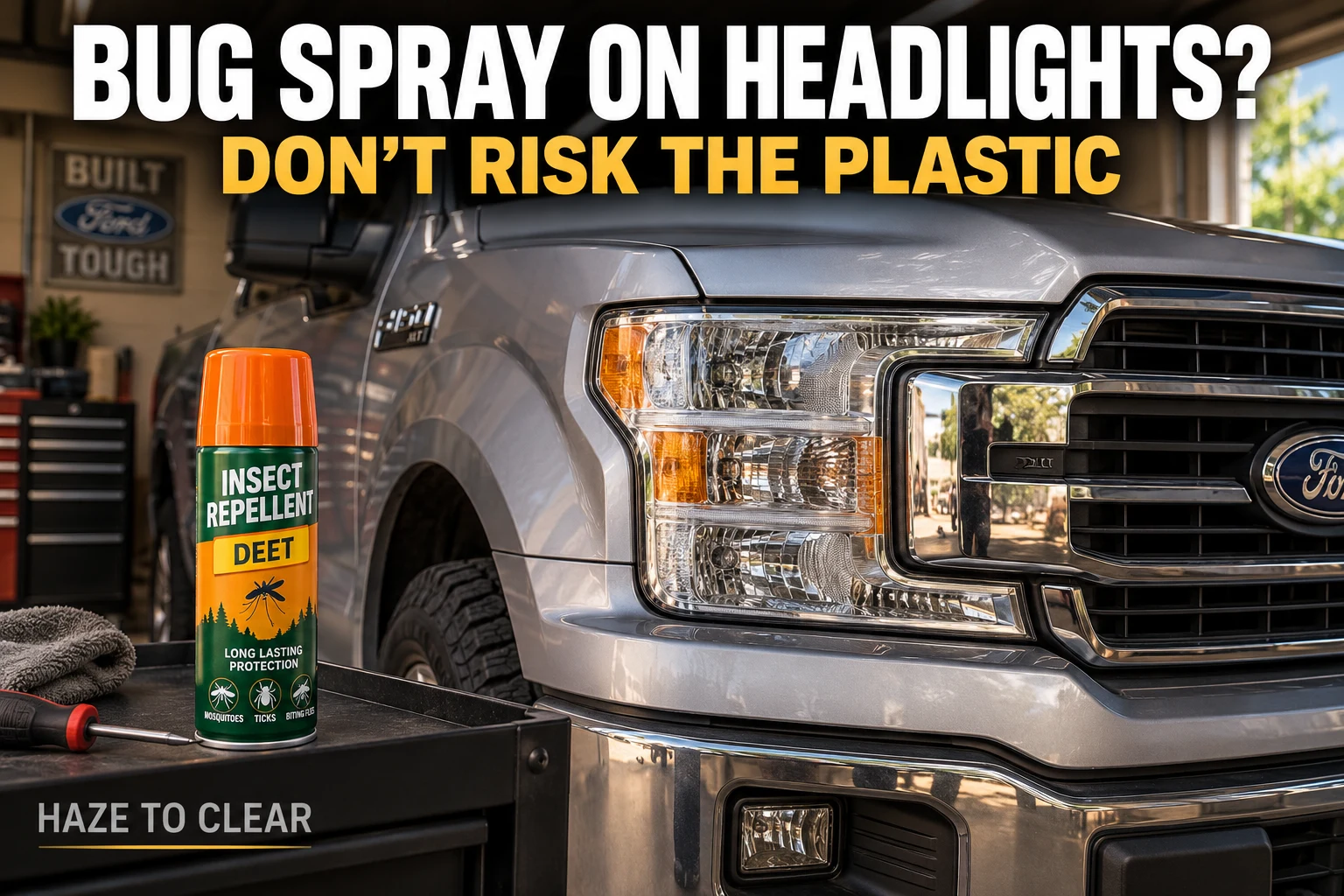
Yes, DEET-based insect repellent can damage plastic. Don't use it as a headlight cleaner. University of Florida IFAS guidance warns against applying DEET on or near plastic and says vehicle finishes can also be damaged.
A video showing a clearer-looking lamp after a wipe doesn't establish that the treatment is safe. You still need to know what happened to the surface—and what it looks like after the product is gone.
The warning is on the product, too
Repel's 7% DEET Family Formula information warns that the product may damage plastics and painted or varnished surfaces. That's a good reason to keep it away from the front of your car, including nearby paint.
Don't decide a lower DEET percentage makes it a detailing product. The warning applies to that 7% formulation too. And don't assume every bottle sold under a familiar brand has the same ingredients. Read the exact container you have.
“DEET-free” isn't a headlight-cleaning instruction either. Use a product intended for the material and follow the vehicle and product directions. There's no need to experiment on an expensive lamp.
What happened to one owner's headlights
In an r/AutoDetailing discussion, an owner described a family member applying DEET to both headlights and getting some on the paint. The owner later reported that a body shop improved the appearance by sanding and polishing.
That's their account, not a verified repair procedure or a result we can promise. The comments offered different remedies, which is exactly why copying a stranger's grit sequence or solvent choice is a poor starting point. Your lens and its existing finish may be different.
Tell whoever assesses the lamp about the repellent. “It suddenly went cloudy” leaves out information that could change the repair decision.
Already used it? Stop adding products
Put the bottle aside and keep its label. Don't try to cancel out one chemical with another, or keep rubbing because a spot looks uneven. Contact the repellent manufacturer for product-specific cleanup advice and follow the vehicle manufacturer's cleaning instructions.
Before any further treatment, record:
- The product name, active ingredients and concentration.
- When it was applied and roughly how long it remained there.
- Whether it touched the lens, paint, trim or all three.
- What you've already used to wipe, wash or polish it.
- Any change in texture, color or clarity after the surface dried.
Photograph the area in daylight once it's safe to do so. Don't scratch at it to test its hardness. If the light output is compromised, avoid relying on that lamp for a nighttime journey until it's assessed.
Can the damage be repaired?
You can't settle that from the product name alone. An assessment needs to distinguish residue from damage to the existing finish or lens. Don't assume every cloudy mark needs a replacement, and don't assume every chemical mark will polish out.
Our restore-or-replace guide covers the broader lens conditions. If the surface looks better afterward, ask what repair was performed and what protection is appropriate; the restoration lifespan guide explains why the finish matters.
For a lens assessment in Torrance and our listed South Bay communities, send a service request with the product details. Include repellent on the paint in your description so it doesn't get overlooked.
Don't trade one household hack for another
If you're still considering a bathroom-cabinet fix, read what toothpaste can and can't do to a headlight. That has a different mechanism from DEET, so the two tricks shouldn't be treated as interchangeable.
Keep insect repellent for its labeled use. A headlight repair should start with identifying the surface problem, not with whatever spray happens to be nearby.
Sources checked October 7, 2026. Reddit accounts are anecdotes, not verification of a repair or inspection outcome.